
Ambassadors’ Club Nepal’s Innovation Event Draws Praise, but Questions Remain Over Impact

वि.सं.२०८३ भदौ ४ बिहीवार
shares

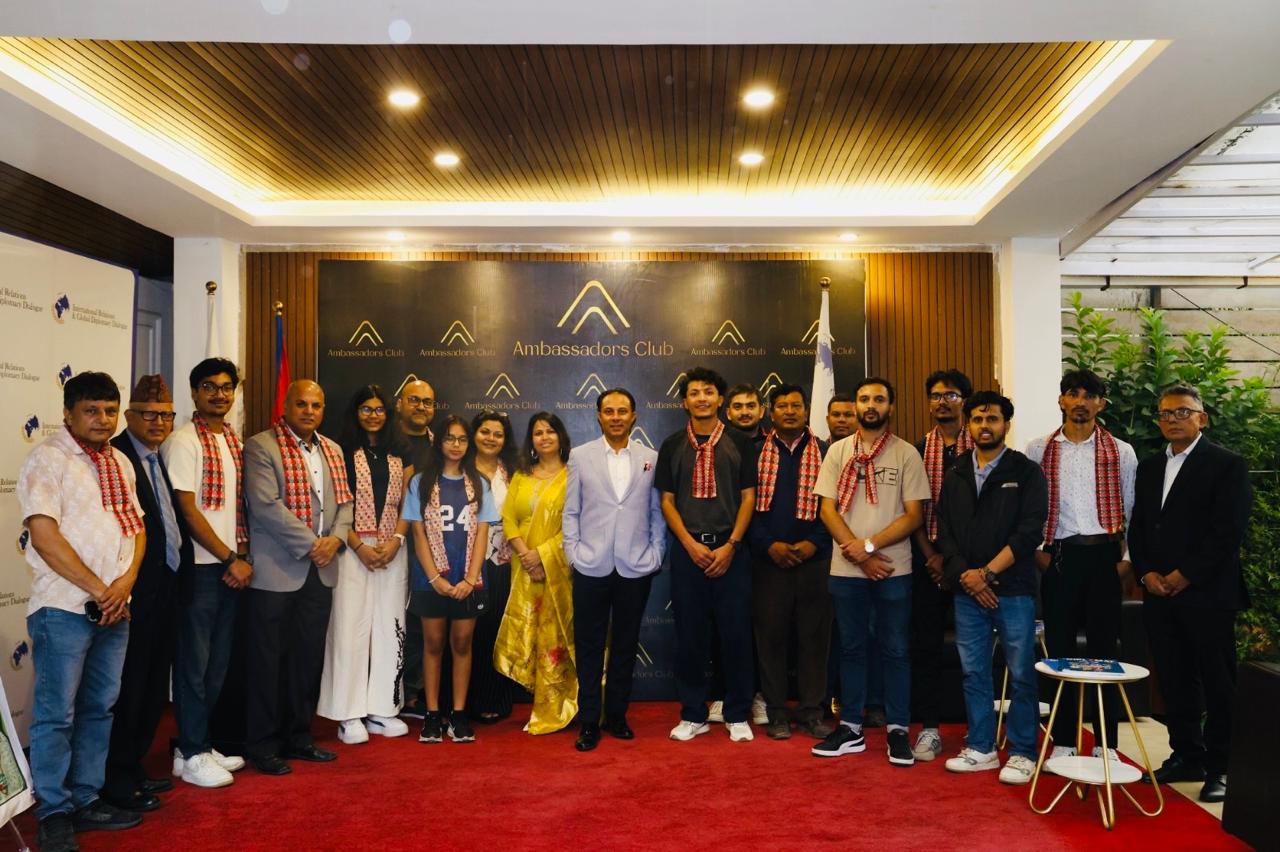
Kathmandu, The Ambassadors’ Club Nepal organised an event titled “Celebrating Young Innovators” in Kathmandu, bringing together diplomats, students, young innovators and representatives of the National Innovation Center (NIC).
While the programme was presented as an effort to promote innovation and youth leadership, much of the event remained focused on speeches, appreciation and networking, raising questions about how such initiatives translate into concrete opportunities and measurable outcomes for young innovators.
Ambassadors’ Club Nepal President Ambassador Dr. Sarmila Parajuli Dhakal highlighted the importance of diplomacy in connecting young people internationally and encouraged participants to remain curious, persistent and willing to experiment.
However, beyond discussions about collaboration and international exposure, the programme offered limited details on specific projects, funding mechanisms, investment opportunities or long-term support that would enable young innovators to turn their ideas into sustainable ventures.
The participation of the National Innovation Center was presented as a major component of the programme. NIC General Manager Sanjay Jha highlighted opportunities for young people to gain practical experience, undertake internships and contribute to innovation.
Representatives of NIC also explained the institution’s role in supporting research and transforming ideas into practical solutions. Yet the programme did not clearly outline how the participating students and innovators would be connected to concrete research funding, incubation, commercialisation or international partnerships following the event.
Kabir Goel, a Year 12 student at The British School, Muscat, shared his experience at the National Innovation Center and expressed an interest in returning to Nepal to develop collaborative projects.
The event also emphasised the role of students, researchers, entrepreneurs and innovators as bridges between countries. However, critics could question whether diplomatic gatherings alone are sufficient to address the deeper challenges facing Nepal’s innovation sector, including limited financing, weak commercialisation, inadequate research infrastructure and the lack of sustained institutional support for young innovators.
The programme concluded with networking and dinner, where participants exchanged ideas and established contacts.
Ambassadors’ Club Nepal described the initiative as an investment in Nepal’s future and promoted innovation as a bridge between Nepal and the international community. The real test, however, will be whether such programmes result in actual projects, investment, mentorship, research opportunities and long-term support for young innovators—or remain largely ceremonial events centred on speeches, recognition and networking.