

Huawei’s AI and Digital Transformation Push Raises Questions Over Consumer Interests, Data Privacy and Internet Costs

वि.सं.२०८३ असोज ३१ शनिवार
shares

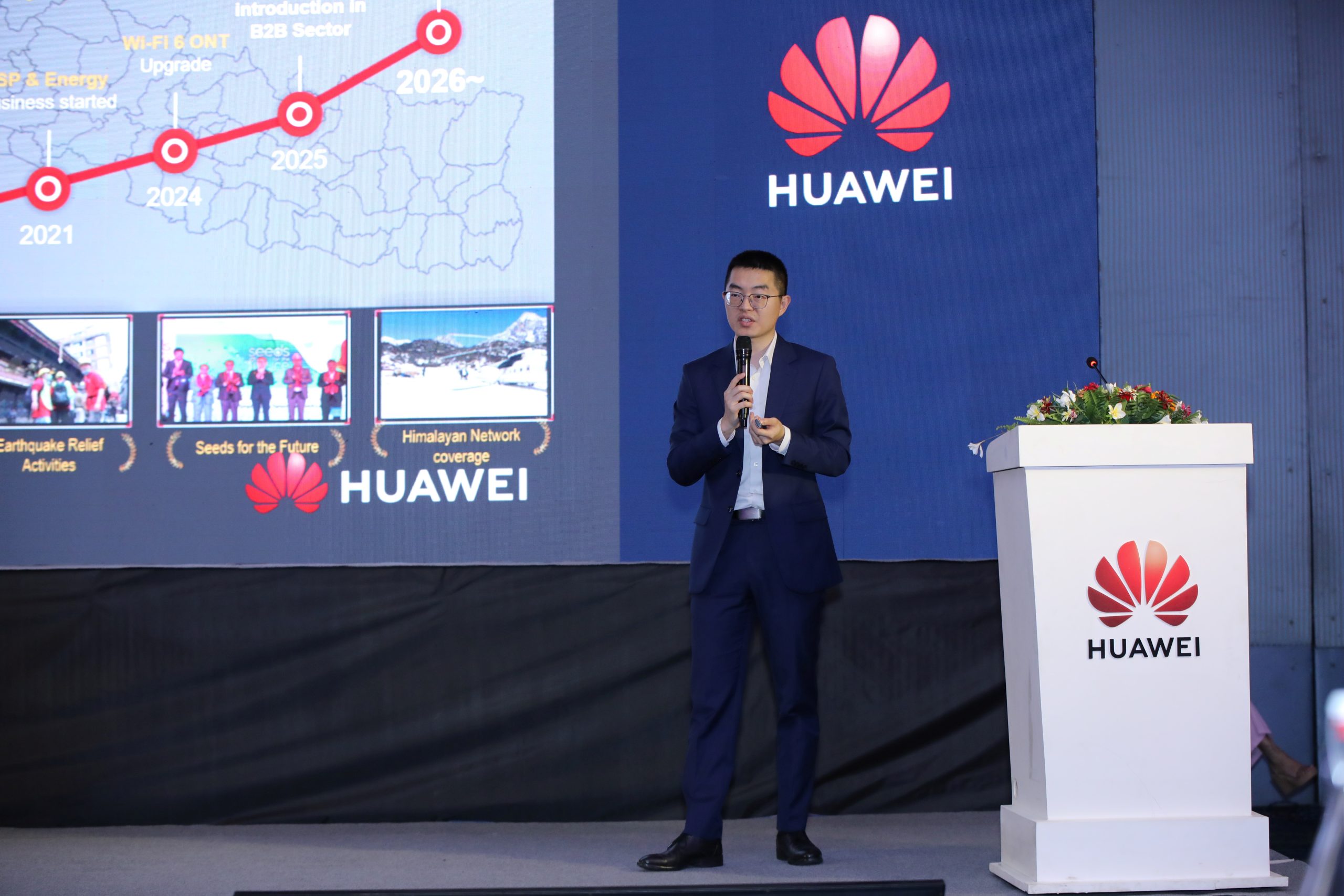
Kathmandu, October 17, 2026 — Huawei is pushing Nepal’s Internet Service Providers (ISPs) to move beyond traditional internet connectivity and expand into artificial intelligence (AI), cloud computing, video surveillance and other digital services. However, amid the promises of technological advancement, questions remain over consumer affordability, data privacy, service quality and whether the benefits of digital transformation will reach ordinary citizens.
Huawei Nepal hosted the Huawei Nepal ISP Event 2026 on October 15 under the theme “Accelerate F5G, Boost Intelligence,” bringing together internet service providers, ICT enterprises and industry stakeholders to discuss emerging technologies and new business opportunities.
The event highlighted Huawei’s strategy to encourage ISPs to adopt intelligent networks, AI-driven operations and new business models. While these developments could modernize Nepal’s digital infrastructure, they also raise important questions about investment costs, consumer protection and the long-term implications of expanding technology-dependent services.
Welcoming participants, Chester Chen, CEO of Huawei Nepal, said Nepal’s digital ecosystem was entering a new phase in which connectivity would become increasingly important for economic growth, innovation and digital inclusion.
He encouraged ISPs to move beyond conventional internet services and embrace intelligent networks, AI-driven operations and new business models.
Although the strategy could create opportunities for Nepal’s ISP industry, the potential impact on consumers remains an important consideration. If companies invest heavily in new infrastructure and technologies, will those costs be absorbed by service providers or eventually reflected in subscription prices?
For consumers already concerned about internet affordability, reliability and service quality, technological upgrades must translate into tangible improvements rather than simply creating new revenue streams for businesses.
Lawrence Wu, COO of Huawei’s Overseas ISP Business Unit, highlighted the growing demand for high-performance networks, computing resources and digital services driven by AI.
He also pointed to Nepal’s comparatively competitive electricity costs as a potential advantage in developing AI-related opportunities.
Huawei encouraged ISPs to explore services such as AI tokens, Model as a Service, GPU as a Service, and upgraded storage and network infrastructure.
However, entering these markets requires substantial investment, technical expertise, reliable electricity, cybersecurity measures and skilled human resources. Smaller service providers could face difficulties competing with companies that have greater financial and technological capacity.
The key question is whether these investments will generate affordable, accessible services for Nepalese consumers or primarily strengthen the commercial position of technology providers and large ISPs.
Andy Wu, Huawei APAC Optical Director, introduced the company’s “Home Network + X” strategy, highlighting Video Surveillance as a Service (VSaaS) and Wi-Fi as a Service (WaaS) as potential growth opportunities for Nepalese ISPs.
These services could improve home connectivity and provide additional convenience. However, expanding internet-connected surveillance systems also increases the importance of protecting personal information and preventing unauthorized access to sensitive data.
Consumers need clear answers about where surveillance footage and other personal data are stored, who can access them, how long they are retained and what safeguards exist against misuse or cyberattacks.
The available press release does not provide detailed information about the specific privacy safeguards or data-protection measures discussed at the event. This does not establish that Huawei has neglected these issues, but it highlights the need for greater transparency as such services expand.
David Hu, Huawei APAC ISP CTO, discussed the transition from traditional Internet Service Providers to Managed Service Providers (MSPs) in the AI era.
The proposed transition could allow ISPs to diversify beyond internet subscriptions and offer computing, storage, AI and other managed digital services.
However, successful implementation will depend on more than access to new technology. Local companies will also need trained personnel, sustainable investment models, reliable maintenance, effective cybersecurity and the capacity to compete in an increasingly technology-driven market.
Without these foundations, the benefits of digital transformation could remain concentrated among a limited number of businesses.
Huawei says it has maintained a presence in Nepal for 27 years and remains committed to working with local partners and ISPs to improve network quality, operational efficiency and digital services.
According to the company’s corporate profile, Huawei was established in 1987 and operates in more than 170 countries. Huawei Nepal states that it began operations in 1999.
The company also claims to serve more than eight million people daily across Nepal. However, the available press release does not explain the methodology used to calculate this figure or provide details of independent verification. The figure should therefore be understood as a company-reported claim.
Assessing Huawei’s contribution to Nepal’s digital development requires attention not only to its technological reach but also to measurable improvements in service quality, affordability, cybersecurity and access in underserved communities.
Huawei’s ISP Event 2026 presented AI, next-generation connectivity and intelligent digital services as important opportunities for Nepal’s telecommunications sector.
Such developments could help modernize the country’s digital infrastructure and create new business opportunities. Nevertheless, technological advancement alone does not guarantee inclusive digital development.
The real test will be whether consumers receive faster and more reliable internet at affordable prices, whether rural and underserved communities gain better access, and whether personal data remains protected as connected services become more widespread.
Digital transformation should not be measured solely by corporate expansion, new technology deployments or increased revenue. It should also be measured by affordability, transparency, consumer protection and the extent to which ordinary citizens benefit.
As Huawei and Nepalese ISPs pursue new opportunities in AI and digital infrastructure, clear commitments to data security, fair competition and consumer interests will be essential to ensuring that technological progress serves the public as well as commercial objectives.