
Bishal Bhandari Accused of Undermining Nepal Red Cross as Donor Agencies Grow Increasingly Concerned

वि.सं.२०८३ भदौ २५ बिहीवार
shares

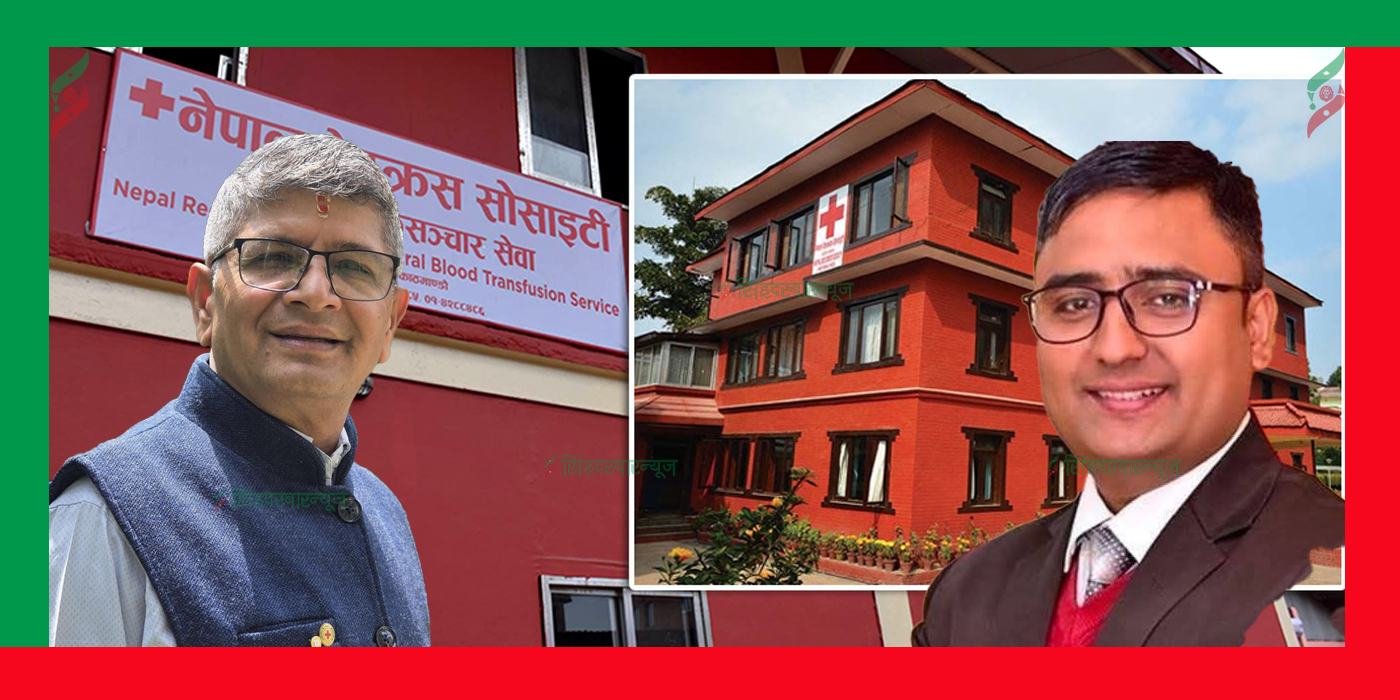
Kathmandu: Nepal Red Cross Society (NRCS) is facing growing questions over institutional transparency, decision-making, employee management and coordination with international partners under the leadership of Chairman Bishal Bhandari.
Employees and individuals familiar with the organisation have alleged that the current leadership has adopted an increasingly opaque and unilateral working style, raising concerns about the governance and institutional credibility of one of Nepal’s major humanitarian organisations.
Since Bhandari assumed leadership, a number of decisions and activities within the organisation have reportedly become controversial. Questions have been raised over the way executive committee meetings are conducted, how decisions are made and how important administrative and strategic matters are handled.
According to an employee familiar with the situation, there is no consistent standard regarding which decisions of the executive committee are disclosed publicly.
“Decisions considered favourable to the leadership are made public, while other important decisions and processes remain outside public scrutiny,” the employee claimed.
Concerns have also been raised about the lack of a clear institutional mechanism for handling strategic decisions, correspondence with government agencies and development partners, and the systematic preservation of official documents and records.
Employees Allegedly Working Under Pressure
The leadership has also been accused of exerting pressure on employees, interfering unnecessarily in their work and, in some cases, intimidating staff members.
Several employees reportedly feel uncomfortable signing administrative and financial documents because of concerns that they could later be held personally responsible if problems arise.
“In some cases, employees have allegedly been compelled to sign documents under pressure,” an employee said on condition of anonymity. “There is a fear that if something goes wrong later, the responsibility will be shifted onto the employees.”
According to sources within the organisation, even some office-bearers have become reluctant to sign certain documents and decisions because of concerns over accountability. Such hesitation, they say, has begun to affect the organisation’s decision-making process.
The allegations have raised a broader question: Is the leadership strengthening institutional accountability—or creating an environment in which responsibility is pushed downward while decision-making remains concentrated at the top?
Donor Agencies and Partners Reportedly Unhappy
Concerns are reportedly not limited to employees and office-bearers.
Sources familiar with the organisation’s relations with international partners claim that dissatisfaction and uncertainty have been growing among partner organisations and donor agencies over the current leadership’s working style.
Nepal Red Cross maintains relationships with international humanitarian organisations, development partners and donor agencies. Effective coordination, transparency and institutional credibility are therefore considered essential to maintaining external support.
However, sources claim that questions over Bhandari’s coordination capacity, transparency in decision-making and institutional management have created unease among some partners.
There has even been internal discussion that certain partner organisations may reconsider aspects of their cooperation and support if governance and coordination issues remain unresolved.
Sources also claim that questions regarding the organisation’s leadership and institutional functioning have reached government circles.
Controversial Advisers Raise Further Questions
The controversy has been compounded by allegations that Bhandari has maintained close relations with individuals who have previously been associated with disputes involving the Red Cross.
A senior office-bearer, speaking on condition of anonymity, claimed that individuals with controversial backgrounds have been brought close to the leadership and entrusted with advisory or influential responsibilities.
According to the office-bearer, the influence of such individuals has contributed to what is described as an increasingly opaque and one-sided decision-making environment.
“The organisation’s institutional interests appear to be overshadowed by the advice and interests of a limited group of individuals,” the office-bearer claimed.
Particular questions have been raised over the role of Sudarshan Adhikari, who is described by sources as being close to Bhandari and functioning as an adviser.
Sources claim that complaints have been lodged against Adhikari at the District Administration Office and other government bodies, including agencies dealing with social welfare-related matters. The complaints reportedly raise questions concerning his financial, administrative and ethical conduct.
The allegations remain matters requiring independent verification and due process. However, the continued proximity of individuals facing such allegations to the organisation’s leadership has reportedly generated growing dissatisfaction within the Red Cross.
Red Cross at Risk of Becoming a Centre of Personal Influence?
Some employees and individuals associated with the organisation have expressed concern that the Nepal Red Cross could gradually move away from its humanitarian and institutional mission if decision-making continues to be dominated by a limited circle around the leadership.
They allege that the organisation is increasingly being used as a platform for personal influence rather than being managed strictly according to institutional principles, accountability and humanitarian priorities.
Such allegations are particularly serious for the Red Cross, an organisation whose credibility depends heavily on neutrality, impartiality, transparency and public trust.
The central concern now emerging inside the organisation is whether institutional procedures are being followed consistently—or whether informal networks surrounding the leadership are increasingly influencing major decisions.
Allegations of Political and Administrative Lobbying
Bhandari has also been accused of attempting to secure political and administrative support to prolong or consolidate his leadership.
Sources claim that he has been actively seeking favourable conditions within political and government circles, allegedly with the objective of ensuring continuity of his position and influence within the organisation.
According to these claims, Bhandari has been attempting to cultivate relationships with officials and political actors at various levels of government.
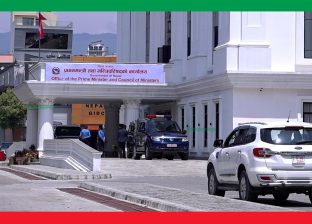
Sources specifically allege that efforts have been made to influence the environment within the Office of the Prime Minister and Council of Ministers, the Ministry of Home Affairs and the Ministry of Women, Children and Senior Citizens.
Critics argue that such lobbying, if proven, would raise serious questions about whether the leadership’s priorities are focused on strengthening the Red Cross institution or protecting individual positions and influence.
Institutional Credibility Under Pressure
The allegations surrounding Bhandari’s leadership have therefore expanded beyond internal administrative disputes.
They now involve broader questions about transparency, accountability, employee protection, donor confidence, political influence and the independence of the Nepal Red Cross Society.
For an organisation entrusted with humanitarian responsibilities, even the perception of political interference, selective disclosure or concentration of power can seriously damage institutional credibility.
The growing concerns among employees, office-bearers and reportedly some external partners indicate that the leadership now faces a credibility test.
The key question is no longer simply whether individual decisions were appropriate. It is whether Nepal Red Cross Society is being governed through transparent institutional mechanisms—or increasingly through a small circle of influence surrounding its chairman.
Unless the allegations are addressed through transparent investigation, documentation and institutional accountability, the controversy could further undermine confidence in the organisation among employees, government authorities, humanitarian partners and the public.